


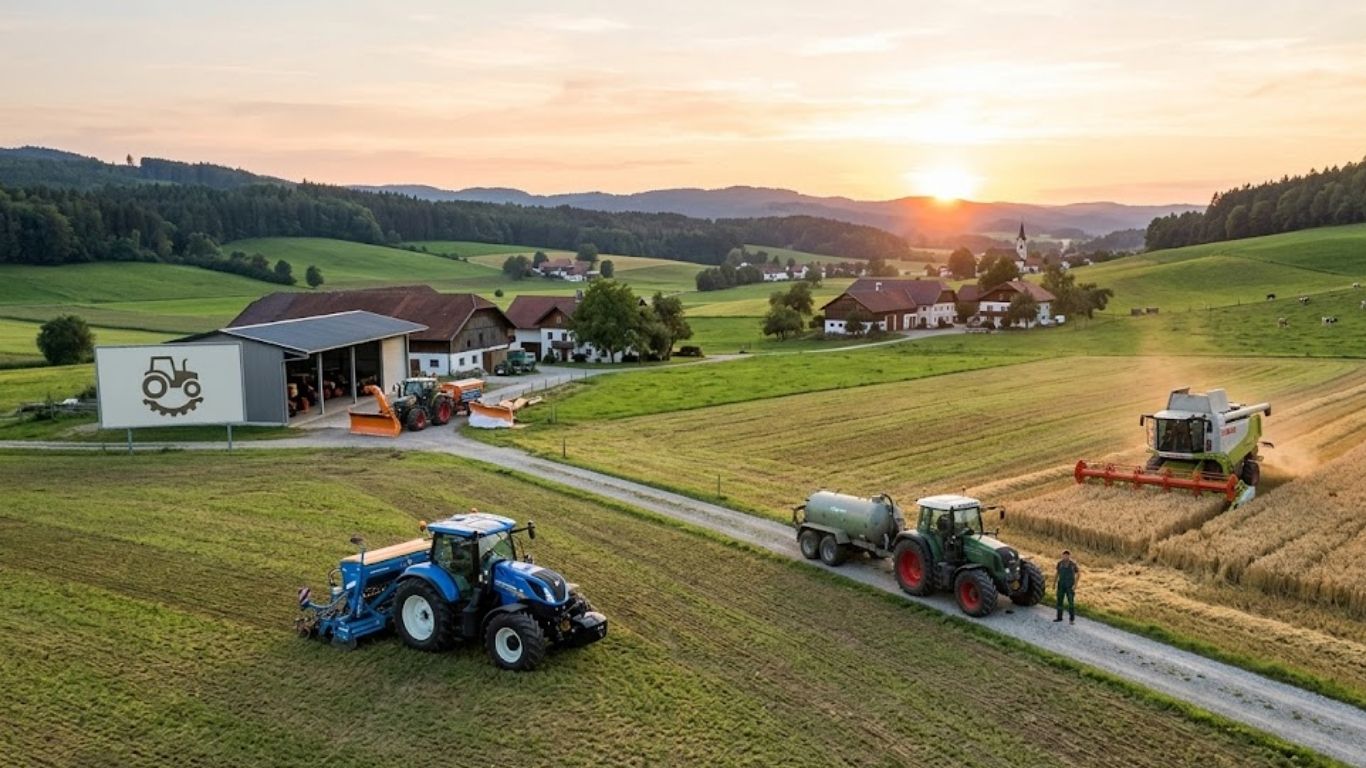
When exploring efficient asset sharing in modern agriculture, looking into maschinenring mining reveals a brilliant, localized blueprint for maximizing equipment utilization. Across the globe, farmers are facing a massive financial squeeze. The price of specialized agricultural machinery has skyrocketed over the past decade, leaving many family-owned farms with a difficult choice: take on crushing debt to buy modern equipment, or rely on outdated tools that plummet their daily productivity. It is an unsustainable cycle that demands a radical shift in how we view ownership versus utility.
This financial bottleneck is exactly why collaborative resource models have transformed from an optional perk into an absolute necessity for rural survival. By shifting the focus away from individual ownership and moving toward high-efficiency community sharing, agricultural networks are unlocking hidden value in heavy machinery. The concept of a shared economy is nothing new to the tech sector, but its application on the physical, muddy terrain of regional farming is completely reshaping the economic landscape of modern agriculture.
Demystifying the Concept: What Exactly is Maschinenring Mining?
To understand this system, one must first clear up a very common digital linguistic mix-up. The term maschinenring mining does not refer to high-tech cryptocurrency operations or heavy mineral extraction deep underground. Instead, it represents the physical confluence of a highly successful European agricultural cooperative model and a specific geographic location. “Maschinenring” translates literally from German as “Machine Ring”—a powerful B2B cooperative framework—while “Mining” is a picturesque, rural municipality located in the Upper Austrian district of Braunau am Inn.
At its core, this specific regional office serves as a centralized hub that orchestrates the logistics of machinery sharing and rural labor deployment. Rather than functioning as a standard rental company that profits off high markups, it operates as a member-driven collective. Local farmers register their available machinery and list their seasonal needs through this localized network. The system turns a fragmented market of individual farm owners into a highly organized, single network capable of moving heavy assets seamlessly across the regional landscape.
The Financial Burden of Idle Machinery on Modern Farms
The traditional farming model dictates that every homestead should ideally own its own tractor, combine harvester, seeder, and specialized tilling equipment. However, this mindset has led directly into what economists call the “machinery trap.” A high-end harvester can easily cost hundreds of thousands of dollars, yet a medium-sized farm might only utilize that specific machine for two or three weeks out of the entire calendar year. The rest of the time, that massive capital investment sits completely idle in a storage shed, quietly depreciating while accumulating rust, dust, and insurance costs.
When you break down the true numbers, the financial bleed of idle machinery is staggering. Beyond the initial purchase price, capital is continuously drained by scheduled maintenance, mandatory safety inspections, and protective storage facilities. For an individual operation, these fixed overhead costs dramatically inflate the production cost per acre. By failing to achieve optimal equipment utilization, farmers inadvertently tie up vital liquid capital that could otherwise be used for high-yield seeds, advanced soil health treatments, or strategic land expansion.
How Maschinenring Mining Drives Smart Equipment Utilization
The logistics engine running behind maschinenring mining provides a direct, elegant solution to the idle machinery dilemma. The cooperative operates a dynamic, digital scheduling network that tracks the location, availability, and mechanical specifications of every piece of equipment in the region. Because weather patterns and harvest windows fluctuate slightly across different topographies and soil types, not every farmer needs the exact same machine at the exact same hour. The cooperative capitalizes on these micro-regional variations to orchestrate a highly fluid asset schedule.
When a specific machine finishes its work on one farm, the cooperative’s logistics framework ensures it is immediately routed to a neighboring property that is just entering its optimal operational window. This continuous loop dramatically increases the equipment utilization rate of a single asset, often doubling or tripling its annual operational hours compared to a privately owned machine. By keeping the wheels turning and minimizing transport downtime, the network ensures that the regional machinery pool operates at absolute peak efficiency throughout the critical growing seasons.
Economic Advantages: Boosting Profitability Without Capital Expenditure
The most immediate benefit of the maschinenring mining philosophy is the wholesale transformation of a farm’s financial structure. By shifting from an outright purchasing model to a highly structured pay-per-use framework, fixed capital expenditures are successfully converted into predictable, variable operating costs. A farmer only pays for the exact hours or acres a machine is actively working their land. This preserves vital cash flow and allows smaller, family-run operations to retain financial agility in an incredibly volatile global market.
+-----------------------------------------------------------------------+
|                       Traditional Ownership                           |
|  [High Fixed Capital Debt] ---> [Idle Storage] ---> [Depreciation]    |
+-----------------------------------------------------------------------+
                                   VS
+-----------------------------------------------------------------------+
|                    Maschinenring Shared Model                         |
|  [Pay-Per-Use Variable Cost] ---> [Max Utilization] ---> [Saved Cash] |
+-----------------------------------------------------------------------+
Furthermore, this collaborative framework serves as a powerful shield against operational risk. When a privately owned, critical piece of machinery breaks down mid-harvest, the individual farmer faces catastrophic financial losses while waiting for parts and repairs. Within the cooperative network, a mechanical failure triggers an immediate logistical realignment. The system can quickly dispatch a matching machine from the shared pool, minimizing crop spoilage and ensuring that individual business operations face minimal disruption during high-stakes seasonal windows.
Expanding Horizons: Beyond Agriculture to Municipal Services
The true brilliance of the operational model engineered at maschinenring mining lies in its seasonal adaptability. Agricultural machinery is inherently tied to the growing seasons, leaving a natural operational void during the freezing winter months. To prevent multi-million dollar fleets from sitting uselessly in winter storage, the cooperative aggressively diversifies its contracts into the public and commercial sectors. The very same heavy-duty tractors used for autumn soil management are quickly retrofitted with specialized plows and salt spreaders for industrial winter road clearing.
This strategic expansion creates a dual-benefit system for both the machinery owners and the surrounding communities. Local municipalities gain access to a massive, highly responsive fleet of winter service vehicles without needing to purchase or maintain an expensive public fleet of their own. Meanwhile, the cooperative successfully extends its equipment utilization calendar into a true year-round operation. This steady, multi-seasonal revenue stream stabilizes the cooperative’s finances and directly supplements the income of local farmers who operate the machinery during the agricultural off-season.
The Workforce Factor: Pooling Skilled Labor Alongside Machinery
Sharing advanced, multi-ton machinery requires more than just handing over a set of ignition keys; it demands highly specialized operational expertise. Modern agricultural implements are packed with complex computer systems, GPS-guided precision steering, and intricate hydraulic controls that require hundreds of hours of training to master. Recognizing this hurdle, the maschinenring mining hub ensures that the machinery pool is inextricably linked with a highly organized regional labor pool.
When a farm requests a specialized piece of hardware through the network, the asset frequently arrives accompanied by a certified, highly experienced operator. This integrated approach solves two critical rural problems at once: it addresses the widespread shortage of skilled agricultural labor, and it protects high-value machinery from the accidental wear-and-tear caused by inexperienced users. It creates a highly efficient ecosystem where human skill and mechanical power are perfectly synchronized to deliver maximum productivity per hour.
Environmental and Sustainability Benefits of Shared AgTech
From an environmental standpoint, optimizing equipment utilization through a centralized collective yields massive sustainability dividends. Manufacturing heavy agricultural machinery is an incredibly resource-intensive industrial process that generates a substantial global carbon footprint. By drastically reducing the sheer volume of redundant machines needed to service a specific geographic area, the cooperative model significantly lowers the overall embedded environmental cost of the region’s agricultural sector.
Traditional Regional Fleet (High Waste):
🚜 (Farm A)  🚜 (Farm B)  🚜 (Farm C)  🚜 (Farm D) -> 4 Machines, Low Usage

Optimized Shared Fleet (Sustainable):
🔄 [  🚜 Shared Cooperative Asset Pool  ] 🔄 -> 1-2 Machines, 24/7 Max Usage
In addition to reducing manufacturing demand, the system democratizes access to advanced, eco-friendly precision farming technologies. Modern, capital-intensive innovations—such as automated targeted fertilizer injectors, ultra-precise weed-mapping sprayers, and low-emission engines—are often far too expensive for an isolated farm to justify buying. Through the shared pool, even the smallest local holdings can regularly utilize these cutting-edge, sustainable tools, directly leading to reduced chemical runoff, optimized fuel consumption, and healthier regional ecosystems.
Key Takeaways for Global Agriculture: Can This Model Be Replicated?
The resounding success of the operations managed by the maschinenring mining office offers highly valuable, scalable lessons for agricultural communities worldwide. While the cooperative model thrives on localized geographical trust, its core structural elements can easily be exported to other regions using modern digital infrastructure. The integration of real-time GPS tracking, automated cloud-based scheduling applications, and transparent peer-to-peer review systems makes managing a decentralized machinery pool easier today than ever before.
To successfully replicate this high-utilization framework anywhere else in the world, the primary barrier to overcome is psychological rather than technical. Farmers must shift their mindset away from the traditional prestige of outright equipment ownership and learn to embrace the measurable economic realities of collaborative utility. When local communities realize that shared machinery directly equates to significantly lower debt, vastly superior liquid cash flow, and less personal operational stress, the path toward a highly efficient, cooperative future becomes clear.
You May Also Like: Star Wars Movie FX Maker Codes
Conclusion
Optimizing asset management is no longer a luxury reserved for massive industrial farms; it has become the core foundation of modern agricultural survival. The localized framework established around maschinenring mining proves that when rural communities pool their physical resources, they can successfully out-compete the harsh economic pressures of high inflation and skyrocketing equipment costs. It is a masterclass in community-driven pragmatism that demonstrates how operational efficiency can easily coexist with traditional farming values.
By viewing heavy machinery as a dynamic, shared utility rather than a static individual status symbol, the cooperative model unlocks unprecedented financial stability for regional operations. As global agriculture continues to navigate an unpredictable future defined by shifting climates and volatile markets, resource-efficient models will undoubtedly take center stage. The operational blueprint refined by maschinenring mining will continue to serve as a shining beacon, proving that a collaborative, smart approach to equipment utilization is the ultimate pathway to long-term rural prosperity.
FAQs
What is the primary purpose of the maschinenring mining organization?
The primary purpose is to act as a highly organized regional cooperative that facilitates machinery sharing, pools skilled agricultural labor, and provides vital municipal and commercial services. By transforming high fixed equipment costs into manageable variable expenses, it dramatically optimizes equipment utilization and boosts the overall profitability of local farms.
Is maschinenring mining involved in cryptocurrency or industrial mineral extraction?
No, it is completely unrelated to tech sector mining or heavy mineral extraction. The name is a direct combination of “Maschinenring” (the widely recognized German-speaking agricultural sharing cooperative framework) and “Mining” (the name of the specific local Austrian municipality where this regional office is headquartered).
How does the pay-per-use system benefit smaller agricultural operations?
The system allows smaller operations to access highly advanced, incredibly expensive precision farming machinery without taking on massive bank loans to purchase the equipment outright. Farmers only pay for the exact duration or acreage the machine is actively used on their land, keeping their vital liquid capital free for other operational needs.
What happens to the shared machinery during the winter off-season?
During the agricultural off-season, the cooperative diversifies its operations by signing municipal and commercial service contracts. The heavy-duty tractors and agricultural assets are quickly retrofitted with specialized winter attachments to handle industrial snow plowing, road salting, and regional land management, ensuring profitable, year-round equipment utilization.
